The Song in the Prompt: What Suno Can Make—and What a Human Still Has to Mean

Editorial featured image for an article about Suno AI music generation and human creativity. Split composition: on the left, abstract code, algorithms, glowing waveform data, and digital audio controls; on the right, handwritten lyrics, a vintage microphone, and a human performer’s emotional creative presence. The two halves blend through colorful musical waveforms. Sophisticated, thought-provoking, album-cover-inspired, cinematic lighting, no readable text, landscape orientation.

I made a song with Suno the other day. “Made” may be doing a little heavy lifting there. I typed a mood, a subject, and a few musical breadcrumbs; the machine handed me a finished track before I had time to locate my reading glasses.

That is Suno’s genuine trick. Its own how-to guide says a user can describe a genre, mood, instrumentation, tempo, or lyrics, and the system will generate a song with structure, instruments, and vocals. It returns two versions. You pick one, revise, extend, and try again. For the first ten minutes, it feels like having a very fast studio band that never asks whether you have paid the deposit.

And yet, “fast” is not the same as “deep.” Suno is excellent at turning a direction into an object. It can give you atmosphere, polish, and a surprisingly convincing chorus. It can help a stuck songwriter get unstuck. It can also produce the musical equivalent of a handsome hotel lobby: pleasant, competent, and hard to remember once you leave.

The human songwriter is doing something stranger. She is not merely arranging sounds. She is deciding which embarrassment to keep. Which line is too true. Which silence belongs before the chorus because that is where the father stopped calling, or the marriage ended, or the kid finally came home. A songwriter brings consequences to the room. The song is shaped not only by taste, but by a life that has had to live with its choices.

There is some evidence for this distinction, with an important asterisk. A 2026 MIT Media Lab report on a controlled study of 152 participants compared SunoAI tracks with music by human composers in calming and energizing settings. Human-composed music elicited the target emotions more effectively, even when listeners said they preferred the AI music. That is not a verdict on every song, or every listener. It is a useful reminder that liking a sound and being moved by it are not always the same thing.

There is another wrinkle. The U.S. Copyright Office’s January 2025 report says human authorship is required for copyright protection. Under current generally available technology, a prompt alone usually does not give a user enough control over the expressive elements to make that user the author of the output. Human-written lyrics, creative arrangement, and substantial edits can matter. Typing “make it sadder” 117 times is not, by itself, a songwriting apprenticeship.

So what happened? A machine made a very usable musical sketch. What did it mean? The sketch was not the same thing as a song with a history. What can we carry forward? Use the tool for speed, surprise, and play. Then bring the part no model can supply on command: attention to a particular life.

And before you release anything, check the rules. Suno’s rights-and-ownership guidance says free-plan songs are for personal, non-commercial use, while songs made while subscribed to Pro or Premier receive commercial-use rights; those rights are not automatically retroactive. The machine may be quick. The fine print, like a good bridge, deserves another listen.

The Dad Joke Lab: Why Puns Make the Brain Do a Little Rebuild

A clever, colorful editorial illustration for a blog post titled “The Dad Joke Lab: Why Puns Make the Brain Do a Little Rebuild.” Show a playful laboratory scene where a smiling brain rebuilds itself with tiny LEGO-like parts, speech bubbles containing harmless visual wordplay, and a warm humorous science-magazine aesthetic. No readable text, no logos, landscape composition suitable as a WordPress featured image.

I have a theory about dad jokes: they are not failed attempts at comedy. They are tiny household experiments in how meaning gets made.

Take the classic: “I’m reading a book about anti-gravity. It’s impossible to put down.” You can feel the eye-roll arriving before the laugh. The joke begins in one frame—gravity, perhaps, a book that is compelling—and then the last phrase quietly swaps the frame. “Put down” means stop reading. It also means set something on a surface. The pun makes your mind hold both meanings, then asks one to step forward wearing a fake mustache.

That little stumble is the engine. Researchers often describe humor comprehension as a two-part dance: first, the brain detects an incongruity; then it resolves the mismatch by finding a workable interpretation. A 2017 fMRI study in Frontiers in Psychology describes the punch line as a re-comprehension of the setup, a small reinterpretation that can feel like an insight. In its sample of 24 participants, 75 percent reported experiencing insight when they understood the jokes. That is a modest study, not a decree from Mount Neuroscience, but it gives the dad joke a respectable job description.

Puns turn the volume up on this process because language is slippery by design. One sound can point to two words. One phrase can carry two routes. The brain has to keep the first route available long enough to notice that the punch line has opened a side door.

A study of 27 native Mandarin speakers, using jokes built around ambiguity, inference, and exaggeration, found that different joke mechanisms recruited partly different patterns of brain activity. The ambiguity jokes required readers to return to the language of the setup and construct another interpretation. That is exactly what a pun asks us to do, except usually with less fMRI equipment and more groaning at the dinner table. The study is here.

Another fMRI study, this one with 17 participants viewing visual puns and other cartoons, separated detecting an incongruity from resolving it. The researchers linked resolution to a left-sided network that included the temporo-parietal junction, inferior frontal gyrus, and ventromedial prefrontal cortex. Translation into uncle-language: the laugh is not only in spotting that something is off. It is in finding the bridge back to sense. Read the PubMed summary.

This may be why a good pun feels briefly satisfying even when it is objectively terrible. The joke gives the mind a small problem, then lets it solve the problem without consequences. No quarterly earnings call. No family group-chat misunderstanding. Just “sole” becoming “soul,” and everyone gets to cross the little bridge together.

What happened? A sentence changed shape. What did it mean? Understanding often requires holding two possibilities before choosing the one that fits. What can we carry forward? Perhaps a little patience with confusion—our own and somebody else’s. Sometimes the mind is not lost. It is looking for the second meaning.

And if that sounds too serious, I have another one: I told my family I was going to write about puns. They said, “That’s a play on words.” I said, “Exactly.”

The Purple Thread: Prince, Faith, and the Funk of the 1980s

Rainy city street with pedestrians, umbrellas, streetlamps, and colorful reflections

The Prompt Bank gave me a good one today: “Prince, faith, and funk: the spiritual undercurrent in 80s pop.” Which is a little like asking where the electricity is in a lightning storm. Still, let’s look.

Prince’s public image was all purple fog, guitar heroics, lace, and enough double meanings to keep a seminary ethics class busy until supper. But underneath the spectacle was a serious religious imagination. He was raised Seventh-day Adventist and later became a Jehovah’s Witness. As Religion News Service notes, faith was not a side room in his work; across nearly four decades, it kept wandering onto the main stage.

Take “I Would Die 4 U,” from Purple Rain (1984). It can play as a love song, but the lyrics also borrow the language of messiah, dove, conscience, forgiveness, and belief. That ambiguity is the point. Prince was not handing us a tidy tract with a guitar solo attached. He was letting desire and devotion argue in public, sometimes in the same verse. The song asks what kind of love can say, “I will carry this,” without pretending that carrying it will be easy.

The album itself helps explain why the spiritual current could hide in plain sight. The Library of Congress describes Purple Rain as a dense fusion of funk, synth-pop, soul, guitar-based rock, psychedelic color, and sensual lyricism. That mixture was not a failure to choose a lane. It was the lane. Prince made contradiction sound less like a problem to solve and more like a room large enough for a human being.

That matters because 1980s pop often treated spirituality as either a joke, a special effect, or a soft-focus chorus. Prince kept it messy. “1999” could dance through apocalypse. “Controversy” could put questions about God beside questions about identity. Later songs made the biblical references even harder to miss. A university-affiliated study of Prince’s faith journey describes a movement from the provocations of his early records toward a more explicit, disciplined religious practice. Not a straight line. More like a funk bass line: it circles, disappears, and then lands exactly where you forgot it was going.

I find that more honest than the usual conversion story. We like clean before-and-after narratives: wild artist becomes devout believer, end of film. Prince’s catalog resists that edit. The questions remain audible. What does the body owe the spirit? Can pleasure be examined without being despised? Can a person change without disowning every earlier self? His answers were not always comfortable, but they were alive.

What happened? An extraordinary 1980s pop career carried Christian language, apocalyptic imagery, gospel feeling, and sexual provocation in the same purple suitcase. What did it mean? Formation is rarely a clean genre. We are shaped by what we inherit, what we question, and what we keep trying to reconcile. What can we carry forward? Maybe this: when we examine a song, a habit, or a decade, we should listen for the question beneath the beat. Even the loudest music may be asking what kind of love can make us whole.

Saturday Morning Heroes Had a Price Tag

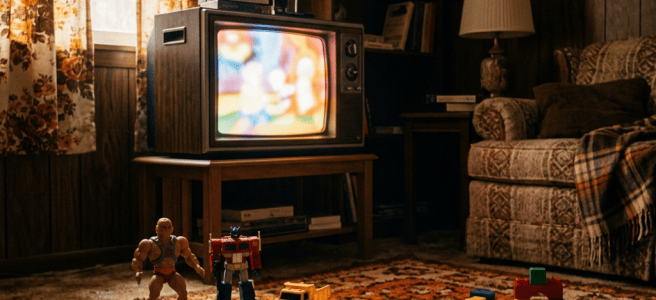
Nostalgic 1980s living room with television

I can still hear the Saturday morning soundtrack: the refrigerator opening, a bowl of cereal going soft, and a cartoon hero announcing that evil was about to have a very bad day. The stories felt free. The toys, less so.

That is the first quiet lesson those 1980s cartoons taught about money: desire can arrive wearing a cape.

He-Man, G.I. Joe, Transformers, the Care Bears, the Smurfs. They were shows, yes. They were also characters designed to travel. From screen to toy shelf. From toy shelf to lunchbox, book, bedsheet, and birthday wish. A University of New England scholar writing in The Conversation describes the 1980s shift toward the “character franchise”: one set of characters supporting television, toys, and licensing. Mattel launched the first He-Man merchandise in 1982, followed by a 65-episode animated series in 1983.

The rules around children’s television were changing, too. The Federal Communications Commission’s history of children’s-TV policy notes that in 1984 the Commission repealed commercial guidelines for children’s programming. Commercial matter increased. The policy choices helped create the conditions for cartoons that could feel like stories while also moving product. The phrase “program-length commercial” would come later, but the instinct was already there: make the thing you want to sell part of the world a child wants to enter.

That sounds cynical, and sometimes it was. But the cartoons were not empty just because the business model had pockets. The heroes kept teaching a second lesson: courage is usually communal. The good guys formed teams. They shared information. They rescued the smaller, stranger, less powerful member of the group. Even He-Man needed help. (The lesson may be that no one gets to be the most powerful man in the universe before breakfast.)

There is some evidence that stories can carry that kind of formation. A 1987 peer-reviewed study indexed by ERIC studied 40 preschool children and found that prosocial cartoon models elicited more prosocial behavior than neutral models. That does not mean a cartoon automatically makes a child kind. It does suggest that repeated pictures of helping, sharing, and standing up for someone can give those actions a little rehearsal space in the imagination.

So what did Saturday morning teach us about money? Maybe this: buying and belonging are easy to confuse. The toy promised a plastic object, but the story promised membership in a moral universe. You were not merely purchasing a vehicle. You were joining the team. No wonder the cereal tasted better after the commercial.

What happened: television and toy companies learned to build one world across many products. What it meant: our wants are shaped not only by prices, but by stories about who we might become. What to carry forward: enjoy the memory, keep the toy if you still have it, and notice the difference between owning the symbol and practicing the virtue. Which part of your childhood hero still deserves a place on the shelf?

The Walkman Didn’t Just Carry Music. It Carried a Room.

Vintage cassette players, headphones, map, books, and coffee on a wooden desk

I remember the first time I put on headphones and discovered that the walk to the bus stop could have a soundtrack. The sidewalk was the same. The mailbox was still disappointingly ordinary. But the world had acquired a little interior.

That is the quiet revolution of the Sony Walkman. We usually remember it as a gadget from the 1980s: blue plastic, chunky buttons, a cassette turning behind a small window. But its deeper invention was not merely portable music. It was portable privacy.

The story starts with a practical request. Sony co-founder Masaru Ibuka wanted to listen to stereo music on an overseas flight without carrying a heavy recorder. Sony engineers modified a small Pressman device by removing its recording function and adding stereo circuitry. Sony’s own history of the project describes the prototype as a compact cassette player that could travel with you, rather than asking you to remain beside the living-room stereo.

Sony released the first model, the TPS-L2, in Japan on July 1, 1979. The initial run was only 30,000 units. That sounds like a cautious beginning, and it was. Yet those units sold out in less than three months. By April 1980, reported monthly production still could not keep up with demand; by the end of October 1982, more than 60 percent of 5.5 million shipped units had gone abroad. Nippon.com’s account of the early years shows a small experiment becoming a worldwide habit.

But why did people want it so badly? Because headphones changed the meaning of being in public. A bus, a station, or a walk through Manhattan could now contain a private room. The city did not have to become silent; it could be edited.

The Smithsonian’s history of the Walkman calls attention to this double edge. A personal stereo could calm a person, shape a mood, or make a long commute bearable. It could also look like a tiny “do not disturb” sign. People criticized the device for shutting out the world, while users experienced it as a modest form of autonomy. The same pair of headphones could be refuge or retreat, depending on the day. The Smithsonian’s cultural history also notes the social side: shared earbuds and mixtapes made private listening strangely communal.

That tension feels familiar now. We carry whole libraries in our phones, and earbuds have become punctuation marks for modern life. The Walkman did not invent the desire to escape. It made the escape mobile, visible, and available to ordinary people on an ordinary Tuesday.

What happened? A modified recorder became a new kind of personal stereo. What did it mean? Technology could give a person not just information or entertainment, but a small boundary around attention. What can we carry forward? Maybe the question is not whether we should tune out. It is whether we know what we are tuning toward — and whether, every so often, we are willing to press stop and hear the street again.

The Song That Asked a Generation Not to Disappear

Empty school hallway with colorful lockers and large sunset-lit windows

I used to think “Don’t You (Forget About Me)” was just the song that played while Judd Nelson raised his fist. A very 1985 sentence. Probably the sort of sentence that should come with a denim jacket.

But listen again. The song is doing something more interesting than decorating the final shot of The Breakfast Club. It is asking a group of people who have been reduced to labels to remember one another as whole human beings.

The song was written for the movie by producer Keith Forsey and guitarist Steve Schiff. Simple Minds initially declined to record it because the band wanted to make its own material. Then Forsey came to meet them, and the story took a turn familiar to anyone who has ever been persuaded by a conversation over a drink: the Scots went to the pub with him, liked him, and reconsidered. The Guardian’s account of how the song was made captures that lovely bit of creative resistance giving way to human connection.

The result became Simple Minds’ biggest North American hit, reaching No. 1 in the United States and Canada. In Britain, it reached No. 7, according to Official Charts. Numbers are useful here, not because a chart position tells us whether a song is good, but because it shows how widely this particular plea traveled.

And the plea matters because the film understood something about formation. The five students in detention are introduced as types: the brain, the athlete, the basket case, the princess, and the criminal. Then the locked room gets uncomfortable. They confess things. They listen badly, then better. The categories do not vanish, exactly. They become too small.

That is why the Library of Congress added The Breakfast Club to the National Film Registry in 2016, naming it among films of cultural, historic, or aesthetic importance. The announcement called it a seminal coming-of-age drama. “Seminal” can sound like a museum label, but the point is simple: a movie about teenagers in a Saturday detention room kept giving later generations a vocabulary for feeling mis-seen.

Formation often begins when someone refuses the label that has been handed to him. Not with a grand reinvention. With the smaller courage of saying, “That is part of me, but it is not all of me.”

What happened? A film song became an anthem. What did it mean? A generation heard its private ache turned into a public chorus. What can I carry forward? When I am tempted to summarize someone quickly — difficult, lazy, successful, dramatic — I can leave room for the locked-room conversation I have not heard yet.

And maybe, before the day ends, I can ask one person a better question than “How’s it going?” Maybe: “What part of you have I forgotten to notice?”

The Tender Little Heart Inside a One-Hit Wonder

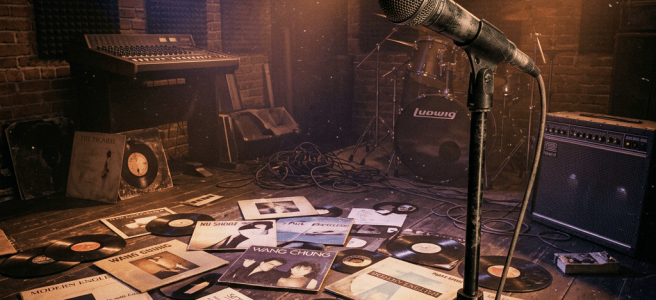
Microphone on a studio stage surrounded by vinyl records and instruments

I have a theory about 1980s one-hit wonders: they are where the decade’s hairspray occasionally lost an argument with the human heart.

You know the songs. The synth starts. The drum machine puts on its shoulder pads. Somebody in the room says, “Oh, I remember this,” and suddenly we are all back in a car we no longer own, wearing a jacket we should not have bought.

The joke is that these songs were disposable. One big single, then the cultural trapdoor. But listen again and a surprising amount of sincerity is still down there, humming beneath the gated reverb.

Take Nena’s “99 Luftballons.” It arrived as bright, bouncy new wave, the sort of tune that could make geopolitical dread sound almost danceable. Yet Deutsche Welle’s history of the song explains the grim little engine underneath: balloons appear on radar as possible enemy objects, both sides assume the worst, and fear escalates toward nuclear war. The song reached No. 2 on the U.S. Billboard chart. That is an astonishing amount of public attention for a warning about how quickly panic can dress itself up as patriotism.

Or “The Safety Dance,” which I once assumed was about safe sex, because the 1980s gave us many mysteries and very few instruction manuals. Ivan Doroschuk told Time Out that the song came from being kicked out of clubs for pogoing. The message was simpler and sweeter: you can dance if you want to. You do not have to borrow the crowd’s rhythm to prove you belong.

Then there is ’Til Tuesday’s “Voices Carry,” a song that could have been reduced to a stylish new-wave chorus and an excellent haircut. Instead, it carried a painful story. Stereogum’s interview with Aimee Mann describes it as a harrowing account of a woman trapped in an abusive relationship. The song was a top-10 hit, but its real staying power comes from the way the polished surface lets a frightened voice remain audible.

Maybe that is the unexpected sincerity. These songs were not always “deep” in the way a professor with elbow patches means deep. They were simply specific. A balloon. A bouncer. A person being told to hush. Small details, carrying larger fears and hopes.

That is how formation often works, too. Not through a grand speech, but through repeated little signals: the song we keep playing, the boundary we finally name, the joke that stops being funny because we have started hearing the hurt inside it. Culture forms us by giving feelings a shape we can recognize.

What happened? A glossy decade made room for strange, earnest songs. What did it mean? Sincerity can hide inside bright packaging without becoming less sincere. What can I carry forward? Before dismissing the old song, the old story, or the old version of myself as cheesy, listen one more time. There may be a small human voice in there, still asking to be heard.

When MTV Taught a Generation to See

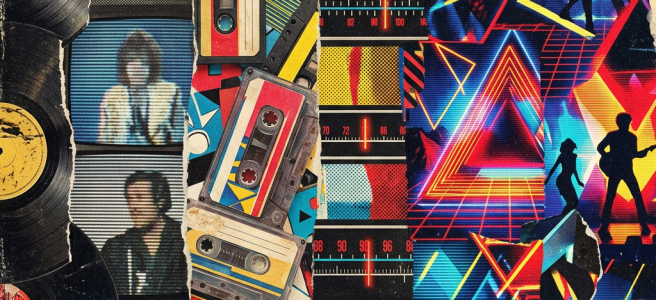
Retro collage of vinyl records, cassette tapes, radio dials, and dancing silhouettes

At 12:01 a.m. on August 1, 1981, a new cable channel introduced itself with a sentence that sounded half like a concert emcee and half like a dare: “Ladies and gentlemen, rock and roll.” Then came the Buggles’ “Video Killed the Radio Star.” Britannica records the moment as MTV’s debut, and the first music video ever broadcast on the channel.

The opening sequence had an almost comic amount of ambition: space imagery, a moon, an MTV flag. The little network wanted to make music feel like an event. It did not yet have the reach to match the drama. The initial broadcast was available only to a small number of cable households in New Jersey, and distribution was hard to come by. NPR’s account of the first 100 videos notes that plenty of music-industry people expected the idea to fail.

That is part of the charm of the first year. MTV was not yet a monument. It was a strange little experiment that asked a strange little question: what if a song did not merely sound like something, but looked like something?

Radio had already taught us to carry music around in our heads. MTV added faces, clothes, rooms, gestures, choreography, and story. The five original video jockeys—Martha Quinn, Nina Blackwood, Alan Hunter, J.J. Jackson, and Mark Goodman—did not just introduce songs. They helped make the channel feel like a place you could visit. The screen became a kind of hallway where music, fashion, and personality kept bumping into one another.

The effect was bigger than a new way to promote records. A Newcastle University history of MTV describes how heavy rotation made visual image central to mainstream pop. A hit single now arrived with a look: the lighting, the jacket, the dance, the fantasy of the artist’s life. A song could become a short film, a commercial, and a little piece of mythology at the same time.

That formed people. Not in the grand, sermon-on-the-mount sense. More like a daily drip. We learned what confidence looked like before we had language for it. We learned that reinvention might involve a haircut, a hallway, a leather jacket, or simply the nerve to appear on camera as someone new. Some of us also learned to confuse a polished image with a whole person. Formation is rarely pure; it is usually a bundle of gifts and distortions.

And MTV’s early visual imagination had real blind spots. The Smithsonian’s history notes that the channel’s rock-oriented programming featured very few Black artists in its early years, a limitation challenged publicly by David Bowie and others. A truthful nostalgia keeps the wonder and the omission in the same frame.

So, what happened? A tiny cable experiment made sight part of the song. What did it mean? For a generation, music became a visual language for identity, aspiration, and belonging. What can we carry forward? Notice what is teaching you to see—and remember that every image, however thrilling, is still only one angle on a human life.

Take On Me and the Courage to Leave the Panel

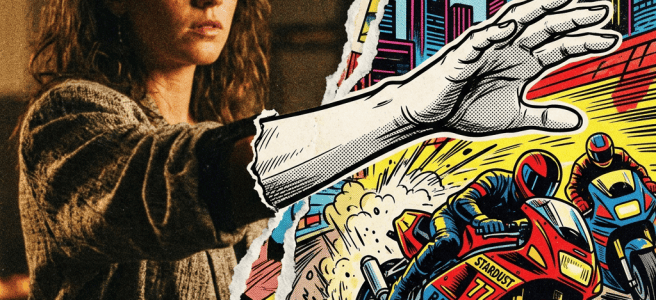
Woman beside comic motorcycle race labeled STARDUST RACING 77

There is a moment in a-ha’s “Take On Me” when the girl looks up from her coffee and realizes the comic-book hero is looking back. It is a wonderfully 1985 idea: romance as a portal, pencil lines as a doorway, and a chorus that sounds like somebody asking for one brave chance.

Then the video does something more interesting. It refuses to let the two worlds stay separate.

If you have somehow missed it, the video moves between live action and a black-and-white comic drawn in loose pencil. The technique is rotoscoping: filming movement, then drawing over the frames. The BBC’s account of the video’s making says animator Michael Patterson spent 16 weeks sketching roughly 3,000 drawings. That is not a weekend project. That is a small mountain of patient marks.

The official credits at Patterson and Reckinger’s site name Michael Patterson and Candace Reckinger as the animation directors. Their work gives the video its strange double vision: the comic feels more alive than the café, while the café feels safer than the comic. One world is exciting but dangerous. The other is ordinary but solid.

That tension is the whole song’s emotional engine. “Take On Me” is not just asking, “Do you like me?” It is asking, “Will you come with me, even though the place I’m inviting you into is unfinished?” The comic hero is literally sketched in. He has no polished edges. He is a possibility with a motorcycle.

And then comes the escape. The girl returns to the ordinary world, but the ordinary world has been altered. The strange thing has followed her home. Or perhaps she has learned to see the room differently. That is what longing often does. It does not simply make us dissatisfied with the present. It gives the present a second outline.

My favorite part is that the video does not treat reinvention as a clean makeover. There is no triumphant “new you” montage with suspiciously good lighting. The transition is messy. It involves fear, a torn page, and a person who has to decide whether the familiar world is still enough.

The song’s public life followed a similar path. Official Charts records a 19-week UK chart run, while the video became a defining example of how an ambitious visual could change a pop song’s reach. The band did not merely release a track; they built a doorway around it.

So what happened? A Norwegian band made a pop song and paired it with an unusually labor-intensive animated film. What did it mean? Millions of listeners were invited to believe that longing could be both frightening and creative. What can we carry forward? Maybe this: reinvention rarely begins with a finished plan. It begins with a line, then another, then the willingness to step through the panel before you know how the story ends.

What is one unfinished possibility you keep treating as if it needs to be polished before you can enter it?

Ukiyo-e and the Courage to Notice What Won’t Stay

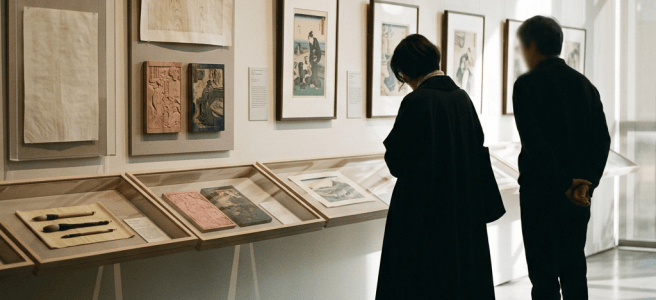
Two visitors examining framed artworks and artifacts in a museum gallery

A prompt landed on my desk about ukiyo-e woodblock prints and the art of fleeting things. Which is a fine way to spend a morning, especially if your alternative is reorganizing the sock drawer for the third time. Ukiyo-e does not merely show a passing world. It trains the eye to receive one.

The word ukiyo-e is often translated as “pictures of the floating world,” or, with a slightly heavier sigh, “pictures of the sorrowful world.” The Library of Congress’s overview places the tradition in Japan’s seventeenth- through nineteenth-century print culture, where artists pictured actors, courtesans, landscapes, stories, and the pleasures of ordinary urban life. This was not art kept at a safe distance from daily life. It was made to circulate.

That circulation required a small orchestra of patience. A publisher organized the project. An artist supplied the design. A carver cut the image into wood. A printer pressed pigment onto paper, lining up each impression with care. As The Metropolitan Museum of Art explains, polychrome prints used a separate carved block for each color—sometimes as many as twenty. The bright final image was therefore a visible record of invisible repetition.

Then there is mono no aware, a phrase that resists being flattened into “everything is temporary.” The Stanford Encyclopedia of Philosophy describes it as the pathos of things, a feeling arising from their transience. The point is not to scold us for loving what changes. It is to notice that the change is part of what makes the thing dear.

Hokusai’s Under the Wave off Kanagawa makes this almost comically clear. A wave rises like a blue claw. Three boats work their way beneath it. Mount Fuji sits in the distance, small and composed. Smarthistory’s account of the print notes how the image turns a split second of danger into something that can be looked at again and again. The wave still falls. The print does not pretend otherwise.

That may be the formation lesson. We often confuse attention with control. We photograph the birthday because we cannot keep the child that age. We save the message because the conversation will move on. We make a plan, then discover that life has its own carving tools. Ukiyo-e offers a gentler practice: receive the impression while it is here.

What happened? A team of makers built images of a world always in motion. What did it mean? Beauty and loss are not always enemies; sometimes they arrive holding hands. What can I carry forward? Today, notice one ordinary thing before rushing past it—the steam from a mug, a joke you have heard before, the last light on the wall. You do not have to make it permanent. Just be there for the impression.